
By Zübeyir Kılınç, Ph.D., Director of Global Partnerships at Travione Global, based in Denizli, Türkiye.
In a companion piece I argued that most visitors see this valley for about two hours, and that nobody measures it because everybody already knows.
This is the other half: what the nights are for.
Nothing listed below is a secret. Almost every item has a government page, and I have linked them. What the valley lacks is not publicity. It is a place in somebody’s schedule.
The three cities
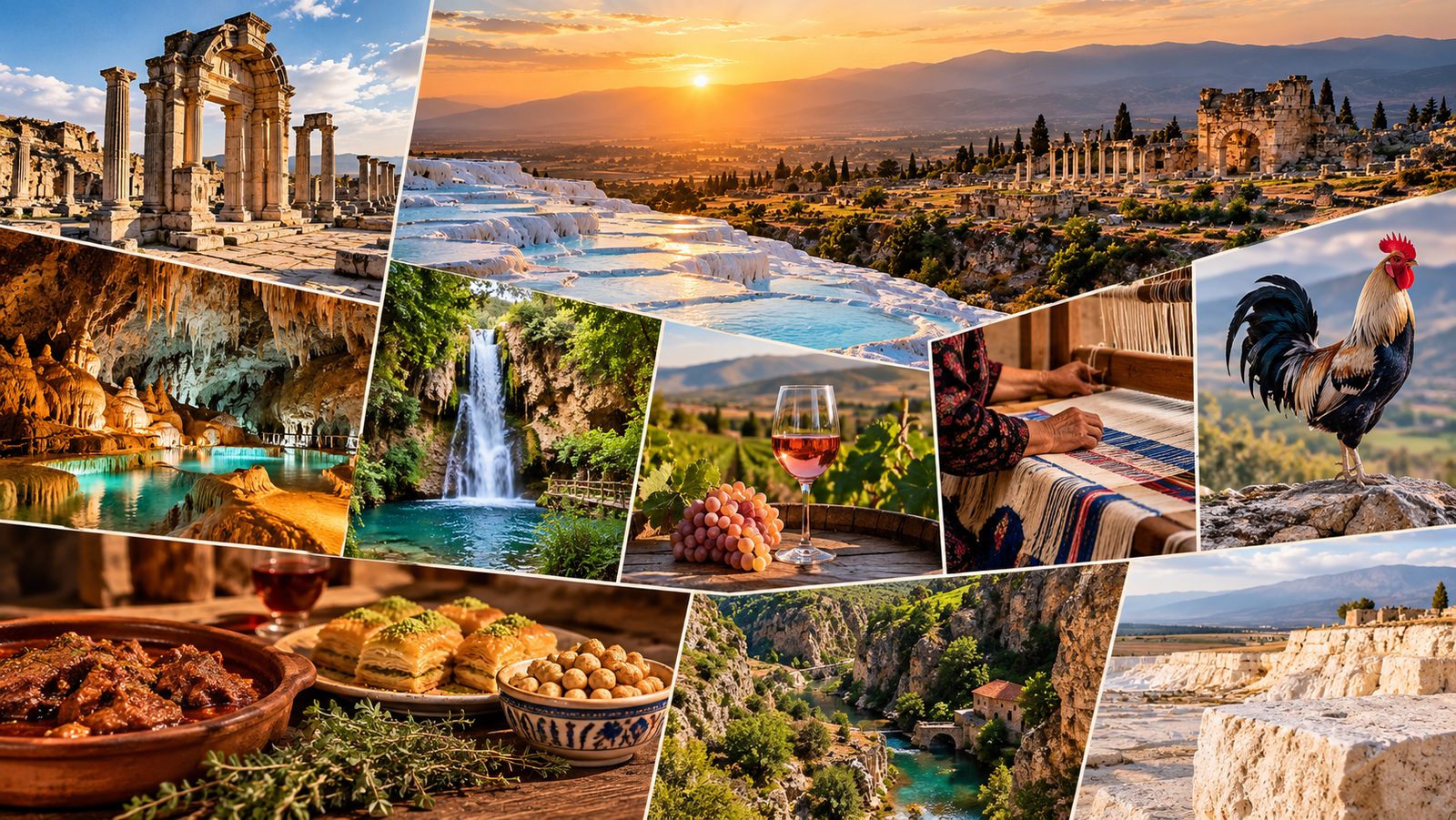
Laodicea is ten kilometres from the travertines and is one of the seven churches of Revelation. It is under continuous excavation, which means it changes year to year — a street opens, a church is uncovered, a stadium emerges. The water pipes are still in the field, half-closed with limescale, which is the detail that makes the famous line about being neither cold nor hot stop being a metaphor.
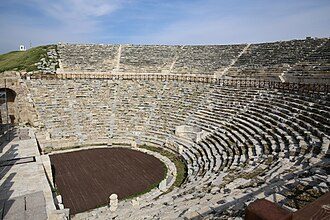
Hierapolis sits directly above the terraces and is the part of Pamukkale most day visitors walk past on their way to the water. Its theatre is among the best preserved in Anatolia and its necropolis is one of the largest.
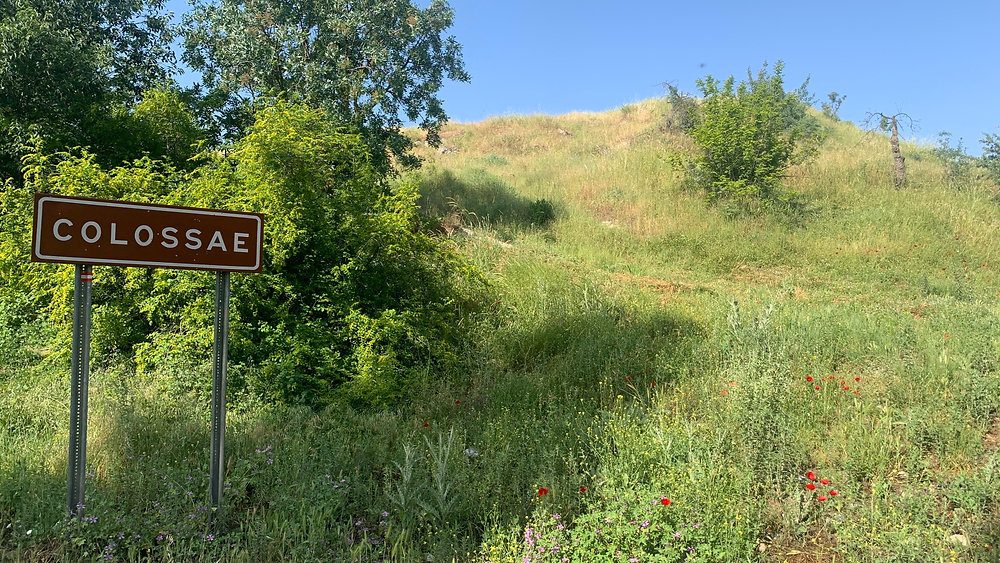
Colossae, about twenty minutes east at the foot of Honaz, is the address of an entire New Testament letter and has never been excavated. There is a mound, a signboard, and wheat. The province’s directorate keeps a list of the ancient cities together.
Underground
The same calcium carbonate that built the white terraces has been working below ground for just as long.
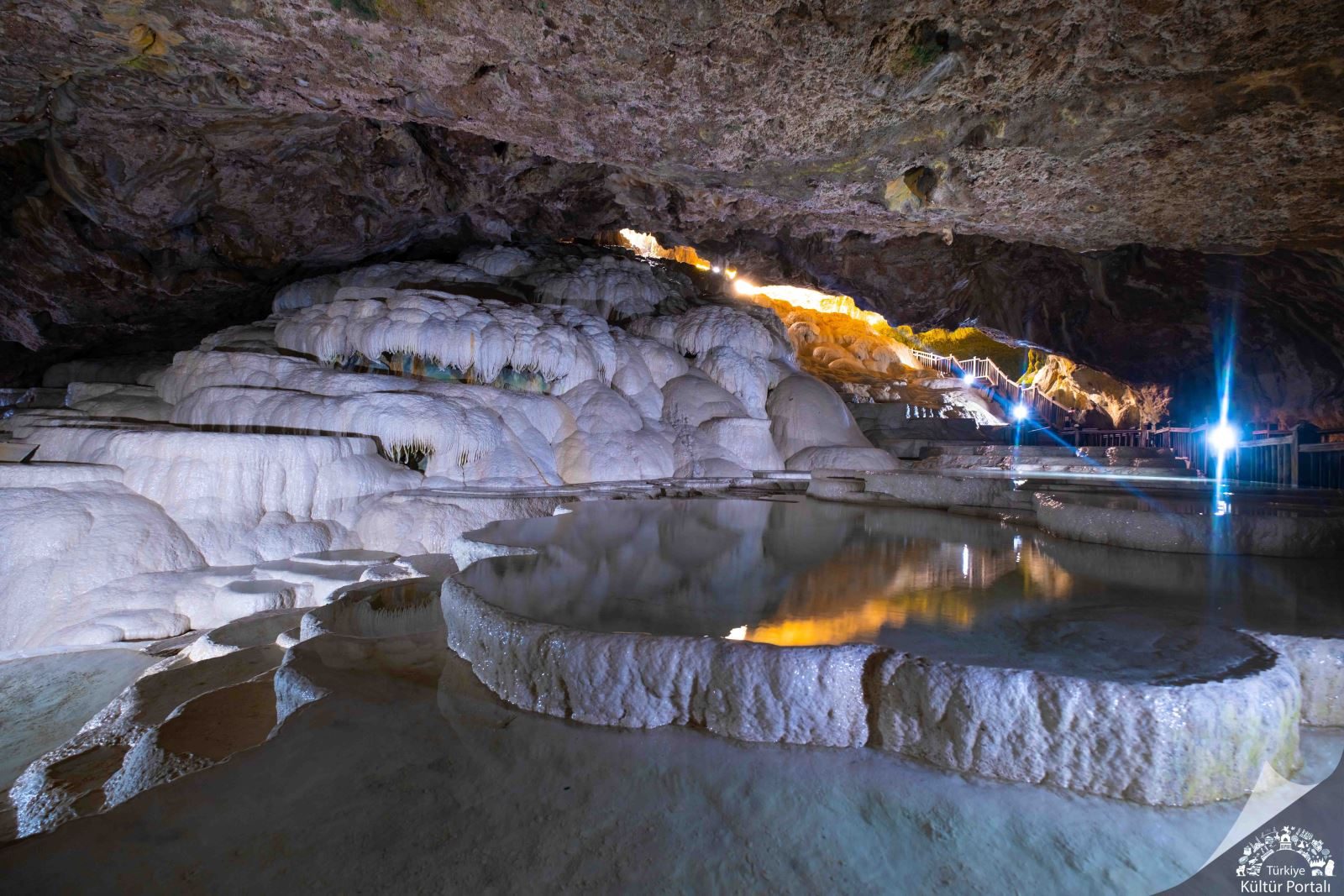
Kaklık Mağarası is the one people call a Pamukkale in miniature, for the obvious reason — the same formations, the same water, under a roof.
Keloğlan Mağarası, out towards Acıpayam, is the larger of the two and named after the bald-headed boy of Turkish folk tales. The directorate keeps a page on cave tourism across the province.
Water
The provincial directorate lists three waterfalls.
Güney Şelalesi, in Güney district, falls about twenty metres and is fed by the Menderes. The Damlataş cave sits inside it.
Sakızcılar Asmaaltı, in Çal, is roughly thirty metres and is known locally as the Weeping Rock.
Homa, also called Gümüşsu, is out beyond Çivril on the Dinar road, and is about the same height.
Acıpayam Kanyonu lies about forty kilometres from the district centre, between the Benlik and Olukbaşı neighbourhoods, with historic mills along it. Please note: access work has been under way and the canyon has been periodically closed to visitors. Call the municipality before you set out.
Vines
Çal is the wine district, and its grape carries its name — Çalkarası, registered as a product of this province. It makes a pale, light red and a rosé that locals drink young and cold, and it is grown nowhere else in quite the same way.
Cloth
Buldan has been weaving for centuries and has not stopped. Buldan Bezi is a registered geographical indication, which is a bureaucratic way of saying the cloth is from here and cannot honestly be called that if it is not. The looms are still in the town, and some of them are still worked by hand.
The rooster
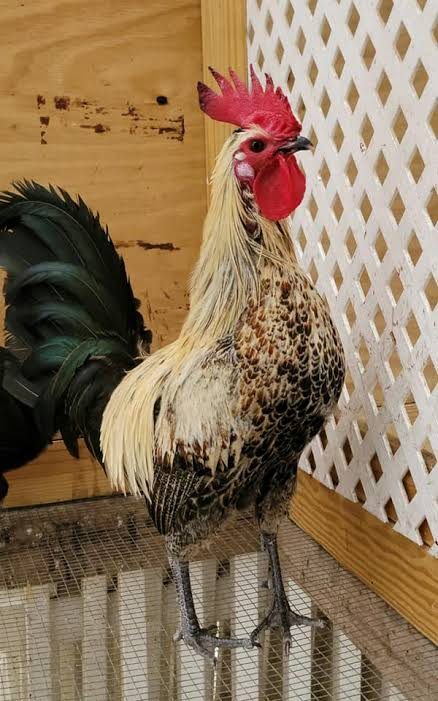
Denizli has a bird of its own, and it is not a mascot.
The Denizli rooster is a native breed kept for one thing: the length and shape of its crow. In its first year the crow lasts around twenty seconds. In the second and third years it gets longer.
What I find remarkable is that length is not the point. The provincial directorate’s own description says the trade values the quality of the voice above its duration — the tempo should rise slowly at the start, fall slowly at the end, and must not break off suddenly. The voices are classified by pitch and clarity. The postures have names: the lion crow, the wolf crow, the crow of the brave man.
The birds themselves are described in the same careful register. Black, kohl-lined eyes. Five recognised plumage types. High legs, long strong neck, broad deep chest, the tail upright and inclined towards the head.
It is a judged art, like wine or horses, and it has been practised here long enough that nobody remembers the beginning. The directorate keeps a flock and sells birds directly from its office in Pamukkale.
The table
Four things on a Denizli table carry a registration of their own.
Denizli Tandır Kebabı — lamb, cooked long and slowly, registered since 2020 as a traditional product name. It is not interchangeable with any other kebab bearing a city’s name.
Tavas Baklavası, from the district of the same name.
Denizli Kekiği, the thyme, which grows on the hills around all of the above.
Denizli Leblebisi, the roasted chickpeas, which is what people here hand you when you arrive.
Even the stone has papers: Denizli Traverteni is a registered indication in its own right — the same material as the terraces, quarried and sold around the world.
What this adds up to
A list is not an itinerary, and I would not want this read as one. Half of what is above needs a car, an hour of driving, and in the case of the working places a telephone call made in advance by somebody who speaks Turkish.
That is precisely the point. None of it is hard to find. All of it is hard to fit — which is why two hours on a terrace remains the default, and why the valley keeps being described as hidden when it is merely unscheduled.
If you are building a programme that treats this as somewhere to stay rather than somewhere to drive through, we are here, and we would be glad to help.