
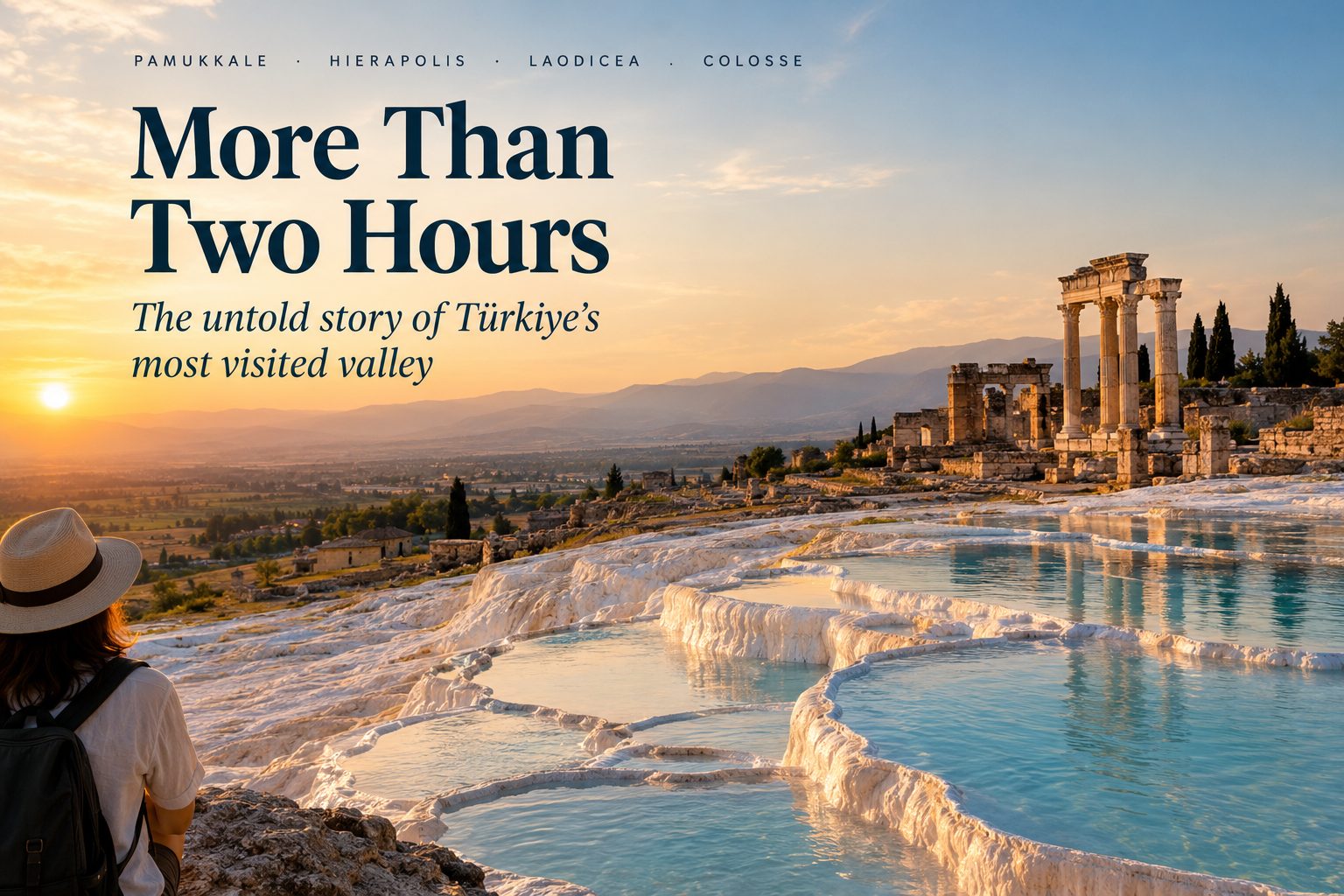
By Zübeyir Kılınç, Ph.D., Director of Global Partnerships at Travione Global, based in Denizli, Türkiye.
In 2025, the Pamukkale Hierapolis site received 2,299,914 visitors.
That makes it the second most visited archaeological site in Türkiye, behind Ephesus. Out of 33,129,106 visits to all the country’s museums and sites together, roughly one in fourteen was to a hillside twenty minutes from my office.
I have gone looking for a second number to put beside it, and I cannot find one.
The number nobody has
How long does the average visitor stay in this valley?
Not at the site — at the destination. How many of those 2.3 million slept in Denizli province. How many arrived from Kuşadası in the morning and were back on the coach by two. What the average length of stay is, and whether it has moved in ten years.
As far as I can establish, nobody publishes this. The ministry counts entries at the turnstile, which is a real and useful number and is the one quoted in every press release each January. The thing it cannot tell you is whether a visit was a holiday or a photo stop.
I want to be careful, because the absence of a figure is not evidence of anything on its own. But I will say what I believe, from watching the coaches: the reason nobody measures the length of stay is that everybody in the trade already knows the answer, and the answer is about two hours.
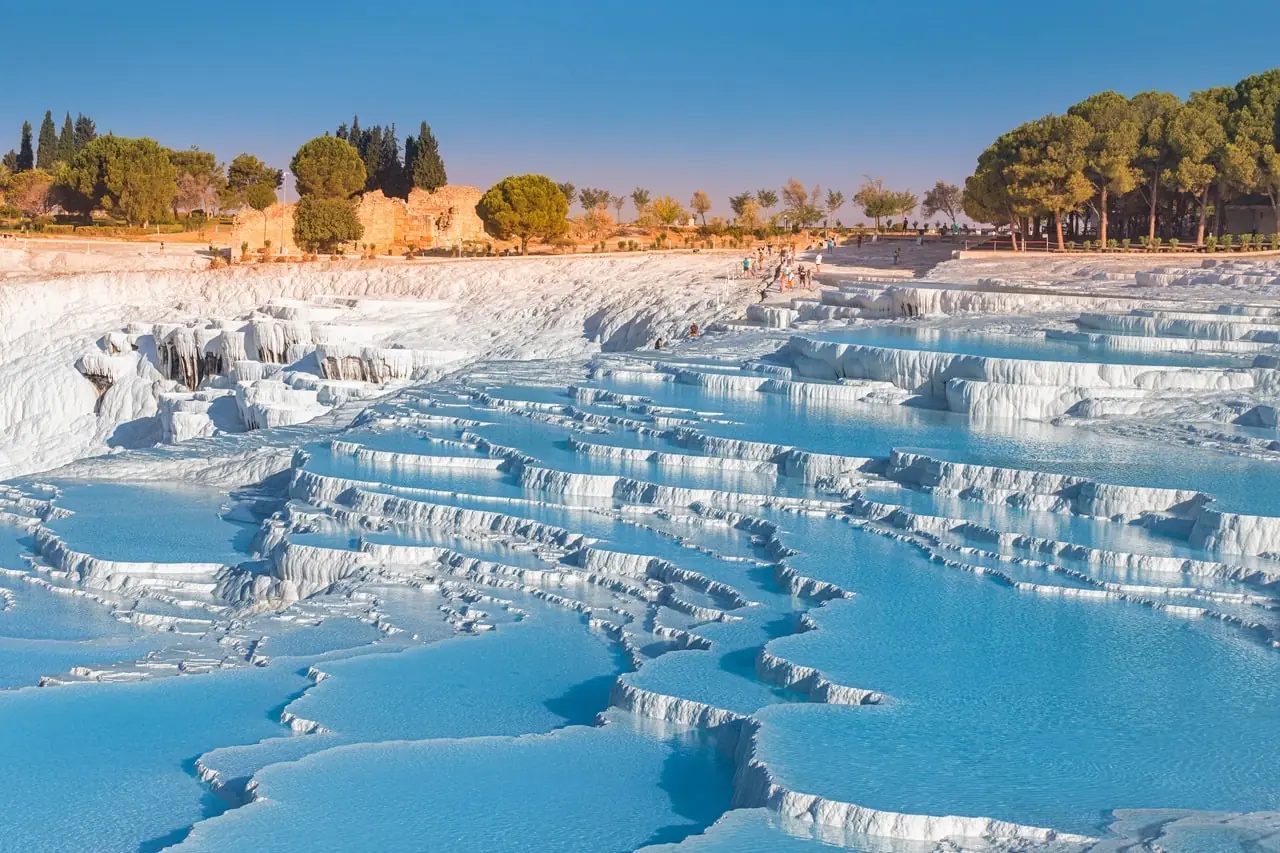
Pamukkale is not a destination in the itineraries that bring most of those two million people. It is a comfort break with a world heritage listing — a scheduled gap between Ephesus and Cappadocia, positioned there because the drive is too long to do in one day and the terraces photograph well in whatever light you happen to arrive in.
What is twenty minutes away
Here is what makes that particular two hours expensive.
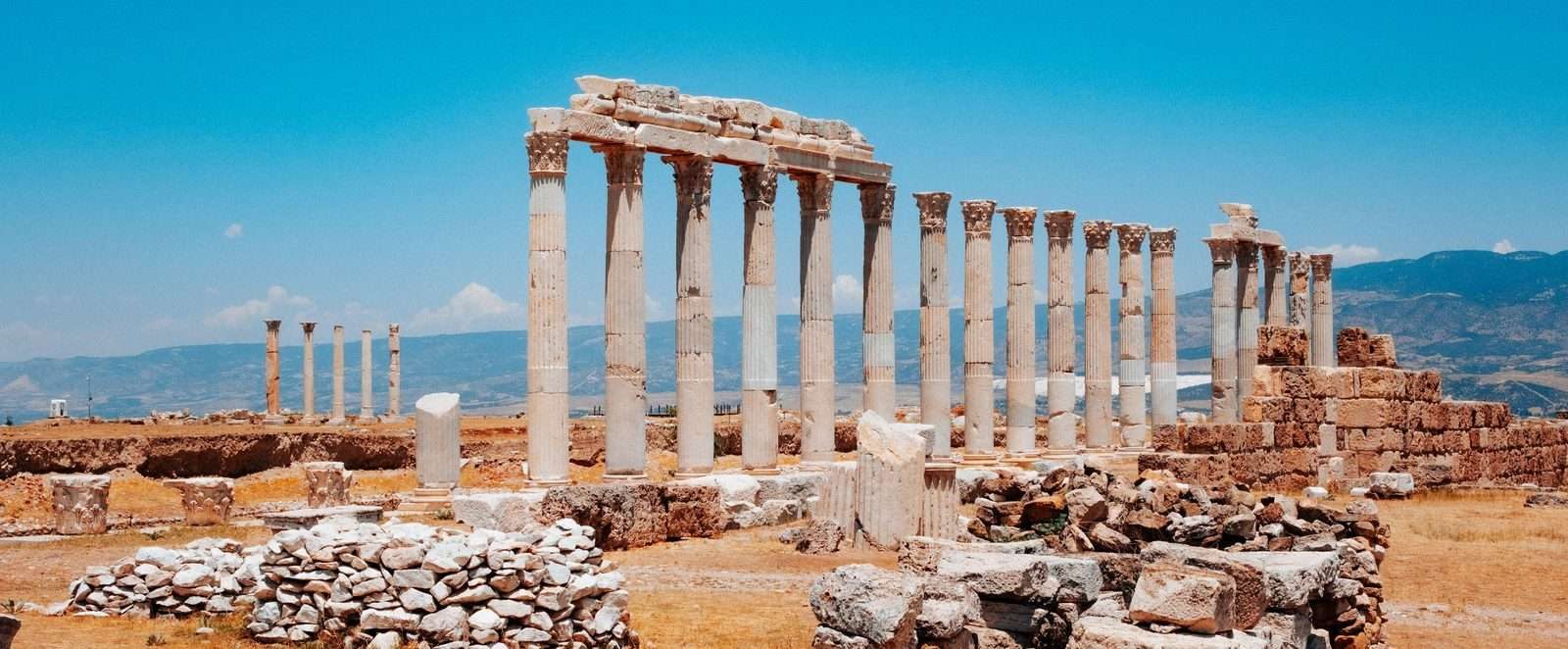
Laodicea is ten kilometres from the travertines. It is one of the seven churches addressed in Revelation, and the letter written to it is the one everybody can quote without knowing where it came from — neither cold nor hot. The city had no water of its own. It was piped in, hot from one side of the valley and cold from the other, and arrived as neither. The pipes are still lying in the field, still half-closed with limescale. The line was not a metaphor. It was a remark about the drinking water, and the congregation hearing it read aloud would have recognised it at once.
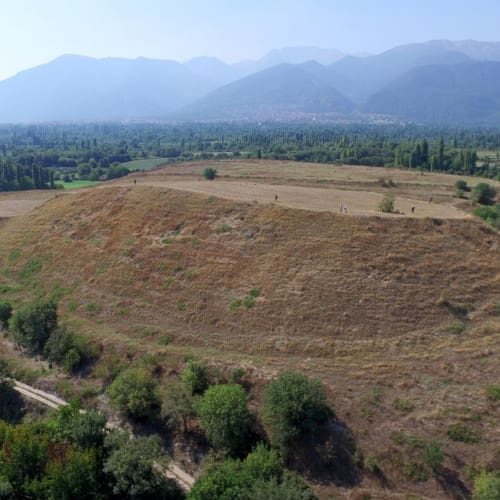
Colossae is about twenty minutes further, under a mound at the foot of Honaz. It is the address of an entire New Testament letter and it has never been excavated. You stand on a hill with wheat growing on it and a signboard, and the city is underneath you, unopened.
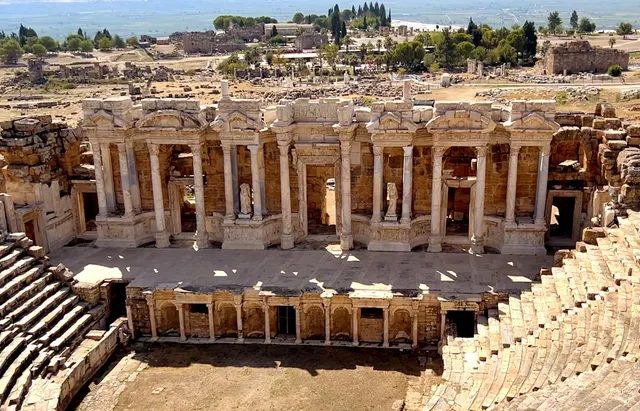
Hierapolis, above the terraces, is named in that same letter. Three cities of the Lycus valley, in one chapter, within forty minutes of each other by road.
Why the enquiries have changed
Over the past months the shape of what we are asked for has shifted, and more of the asking has come from the United States.
I want to be precise about the status of that statement. It is an observation from our own inbox, not a market study, and there is no survey behind it. But the direction is consistent enough that I have stopped treating it as noise.
When I look at who is asking, the logic is not mysterious. A group that has spent a year reading Colossians would quite like to stand at Colossae. A congregation working through Revelation finds that one of the seven letters has a return address ten kilometres from an airport with two flights a day to Istanbul. For that traveller the Lycus valley is not a scenic diversion between two better-known places. It is the primary text.
What they tend to discover is that the available itineraries do not reflect this. The valley is sold to them as Pamukkale with a photograph, and the three cities their reading is actually about are either compressed into one hurried afternoon or left out altogether.
That gap is the whole of our business here, and I am aware that saying so in an essay looks like advertising. So let me put the uncomfortable half in as well.
The problem with a hidden treasure
The reason the two-hour visit dominates is not that operators are lazy. It is that the two-hour visit works.
It is easy to sell, needs no overnight, carries almost no operational risk, and the client goes home happy because the terraces really are extraordinary. An itinerary that stays three nights in the valley has to justify every one of them, has to fill the afternoons with places the client has never heard of, and has to arrange visits to working businesses that may or may not be working that week.
It is a harder product to build and a harder product to sell. Anyone who tells you otherwise is selling the easy version and describing the hard one.
What I would argue is only that the harder version exists, that it is not a niche invented to fill hotel beds, and that the demand for it is arriving from a specific direction for specific and rather good reasons.
What I would want measured
If I could ask for one figure to be collected alongside the turnstile count, it would be the length of stay.
How many of the 2.3 million slept in the province. What the average stay was. Whether it is rising or falling. Split, if possible, by source market.
Because the headline number tells a province it is doing well. It says: second in the country, millions of visitors, a success. The number underneath would tell it something far more useful — whether it is a destination or a rest stop, and whether that is changing.
Those are not the same economy. A rest stop sells tickets and bottled water. A destination sells nights, dinners, guides, drivers, and the small factories a visitor would never otherwise walk into.
Two hours and two nights produce the same entry in the ministry’s table. They produce nothing like the same valley.
A note on who we are
We are based here. We are the ground operator, not a reseller of somebody else’s programme, and the sites in this piece are the ones we work in every week.
A word for American readers in particular, since that is the direction more of our enquiries have been coming from. If you organise travel for a church, a seminary or a group that reads these letters seriously, the three cities you are reading about sit within forty minutes of each other and ten minutes of us. And if you are an operator or an advisor who would rather deal with the people on the ground than through an intermediary, we work on net rates and we are open to that conversation.
A companion piece, what there actually is in this valley, lists the rest of it.
Sources
Visitor numbers. Republic of Türkiye Ministry of Culture and Tourism figures for 2025, as reported in the Turkish press: the Pamukkale Hierapolis archaeological site received 2,299,914 visitors, placing it second among the country’s most visited museums and archaeological sites, behind Ephesus. Türkiye’s museums and archaeological sites received 33,129,106 visits in total in 2025.
On length of stay. I could not locate any published figure for average length of stay, overnight stays in Denizli province, or the share of day visitors to Pamukkale, in either the ministry reporting or the press coverage of it. The two-hour estimate given here is my own, drawn from observing how the valley is scheduled in the itineraries we see, and it is offered as such rather than as a measurement.
On the shift in enquiries. The observation about demand from the United States is drawn from our own correspondence over recent months. It is not a survey, it covers one operator, and I would not want it cited as market data. I have set out the mechanism I believe explains it — the concentration of New Testament addresses in one valley — and the reader can judge whether the mechanism is more convincing than my sample.
On the sites. Laodicea is one of the seven churches addressed in Revelation; Colossae is the addressee of the letter to the Colossians and remains unexcavated; Hierapolis is named in Colossians 4:13. Road distances between the three are given from local knowledge rather than from a published source.